
Sleep & Cognitive Endurance
Sleep deprivation is not a badge of dedication in medicine — it is a patient safety issue and a performance liability. Research consistently shows that sleep-deprived clinicians make more errors, retain less information, and exhibit impaired emotional regulation.
7–9 hours is not a recommendation — it is the window in which long-term memory consolidation occurs. Cramming on 5 hours actively erodes the prior day's learning. Even partial sleep restriction (6 hours/night for 2 weeks) produces cognitive impairment equivalent to 24 hours of total sleep deprivation — and individuals do not accurately self-rate their own impairment.
Schedule sleep as a non-negotiable block before study time, not after. Strategic napping (20 minutes before 3 pm) can restore alertness without disrupting nighttime sleep. Avoid caffeine after 2 pm if you need to sleep by midnight. If sleep disturbance is persistent (difficulty falling asleep, waking, or non-restorative sleep), speak with SHWC or CAPS — this is treatable.
Nutrition in Vet School
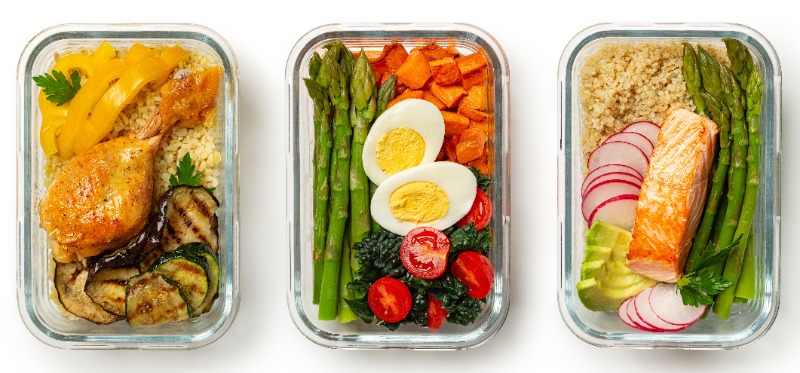
Food is not optional fuel. Cognitive performance, mood regulation, and stress resilience all depend directly on what and when you eat.
- The USU SHWC Registered Dietitian is available for individual appointments — not just for clinical nutrition needs but for general performance optimization.
- See the DVM Student Cookbook section for vetted, student-tested recipes built for the vet school schedule — quick, affordable, and scalable.
- Meal prep on weekends is one of the highest-return time investments you can make during the academic year.
Burnout Prevention: 5-Finger Relaxation Technique
A simple, evidence-based technique for in-the-moment stress reduction. Can be done in under 2 minutes — before an exam, during a difficult rotation, or between classes.
The Five-Finger Relaxation Technique
 Ever feel anxiety during a test or exam? One way that might help reduce the stress or anxiety that you are feeling is to use the “FiveFinger Relaxation Technique” (Davis, et al., 2008, p. 90). It is simple and only takes a few minutes.
Begin by closing your eyes and trying to shut out any external sounds or noises. Using either your right or left hands (or both), you will touch one finger at a time to your thumb. Spend 30 to 60 seconds on each thought, using these basis instructions:
- Index Finger | Physical Fatigue or Tiredness. While touching your index finger to your thumb, go back in time. Think about:
- A time when you had just engaged in some type of exhilarating physical activity.
- Remember how it felt to have spent so much energy while not overdoing it.
- Breath deeply, remember how your muscles felt tired and the sense of accomplishment of having done something rewarding and exhausting.
- Middle Finger | Love or Positive Emotion. While touching your middle finger to your thumb, think of:
- A time when you felt a strong closeness to someone else.
- When you had a warm or loving embrace.
- The look in the eye of the other person in that moment.
- Ring Finger | Compliment. Touch your ring finger to your thumb and think back to a time when you:
- Received a sincere and meaningful compliment.
- Worked extra hard to do something nice for someone else and they recognized what you had done and were sincerely grateful.
- Little Finger | Nature and Beauty. Using your little finger, touch your time and think about a time when:
- You were in a beautiful outdoor place and were looking at the majesty of the skies, the mountains, the fields, the desert, or another place that you have been that was beautiful.
- Contemplate the smells and the sounds of the day with the colors, the breeze, the sounds, the textures, and the light.
Open your eyes and return your focus to the task at hand remembering the many amazing things that you have already accomplished in life.
Adapted from Davis, M., Eshelman, E.R. & McKay, M. (2008). The Relaxation & Stress Reduction Workbook, 6th Edition. Oakland, CA. New Harbinger.
Longitudinal Wellness Curriculum — What to Expect Across Four Years
USU CVM integrates wellness content at key transition points across the DVM program rather than concentrating it at orientation. Here is when and why:
| When | Focus | Content |
|---|---|---|
| Y1 Orientation | Foundation | Imposter syndrome, ProQOL baseline, CAPS intro, normal vs. concerning stress signs, sleep basics |
| Y1 End of Block 1 | First exam season | Early burnout recognition, when and how to ask for help, CAPS single-session option |
| Y2 Midpoint | Accumulated fatigue | Compassion fatigue intro, financial stress check-in (VIN Foundation), peer support resources |
| Y3 NAVLE Prep | High-stakes anxiety | Performance optimization, debt anxiety management, imposter syndrome during board prep |
| Y4 Clinical Onboarding | Rotational transitions | Compassion Fatigue Rounds, off-campus resource access, injury reporting, OCP pathway |